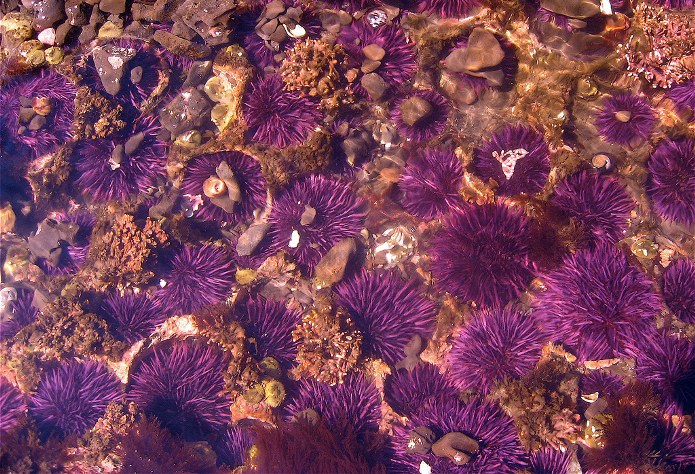
In their paper “Indirect consequences of fishing: reduction of coralline algae suppresses juvenile coral abundance,” researchers O’Leary, Potts, Braga and McClanahan elaborate on this finding.
Recent Content
Ice fishing … under the ice? [video]
This video was shot by Juuso Mettälä at Lake Saarijärvi in Vaala, Finland. All-in-all, the video took six divers to film: three actors, the cameraman (Juuso), and two safety divers.
January downloadable issue is now available
Download it now !
This month’s issue is 43 pages in length (PDF), is a 12.8 MB download, and only costs $0.99! It comes in three formats (PDF, Kindle, and Nook) which makes it great for taking it wherever you go.
“Can you hear me now?” Deep sea fish may make sounds to communicate

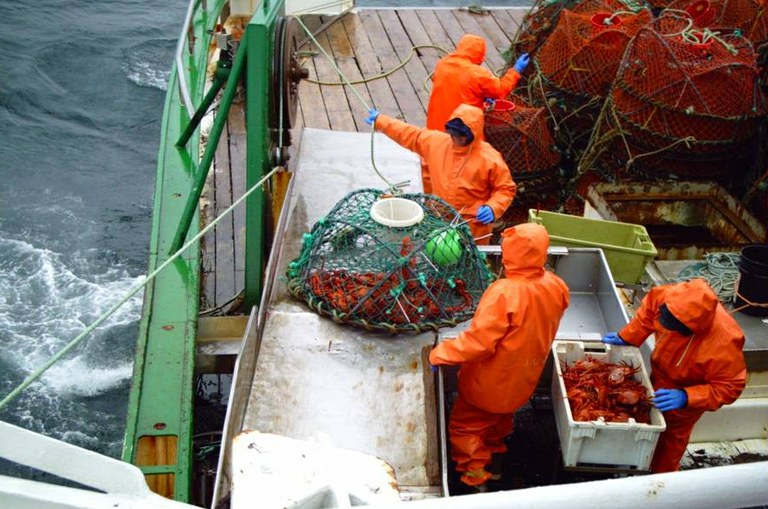
Fishermen deploy the deep-water autonomous underwater listening system (DAULS) inside a commercial deep-sea crab trap.
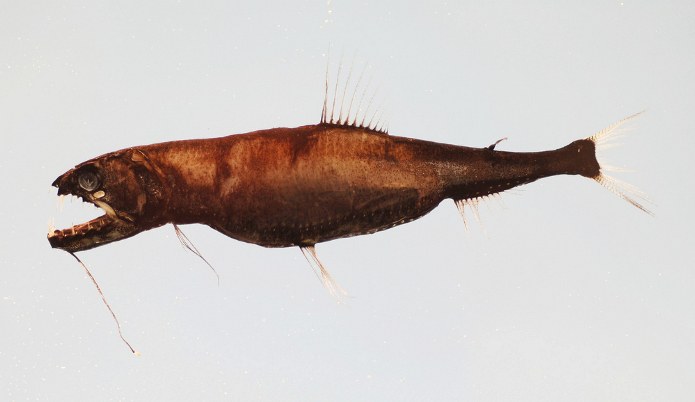
Could deep-sea fish be using sound to communicate? Rodney Rountree, Francis Juanes and other researchers from the University of Massachusetts Amherst believe they could be.
My what big teeth you have!
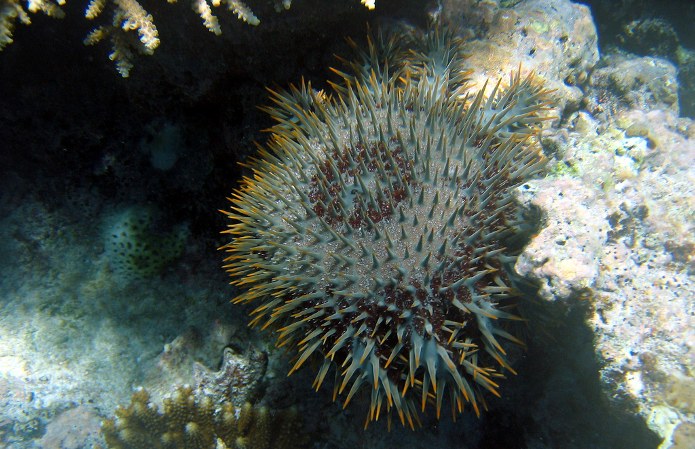
Great Barrier Reef poised for another outbreak of the dreaded crown-of-thorns starfish
According to the Australian Institute of Marine Science Research Director Dr. Peter Doherty, the conditions are very favorable for another invasion as recent floods have increased the spawning activity of the already existing crown-of-thorns starfish in the Cairns area of the Great Barrier Reef.
Even fish are attracted to bling!
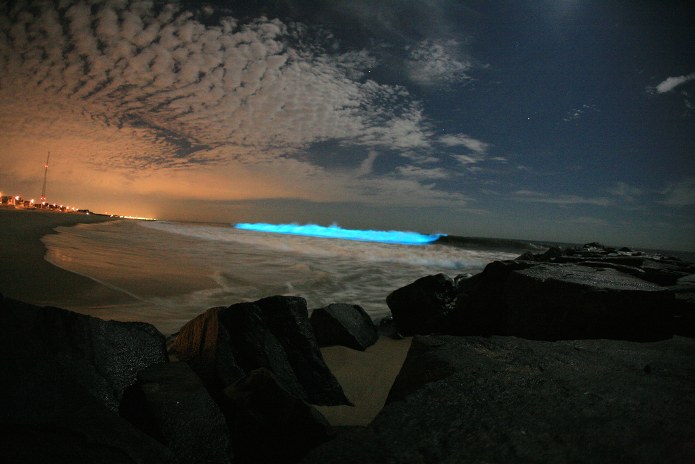
The bioluminescent tide this past September 2011 in San Diego, CA was a beautiful sight and was captured by many amateur and professional videographers.
Like Father, Like Son…Â [video]
High carbon dioxide levels change fish behavior?
Work performed by Philip Munday and other researchers at the James Cook University in Townsville, Queensland, Australia has shown that high carbon dioxide levels severely affect fish, making them bolder and attracted to scents that they would avoid in nature.
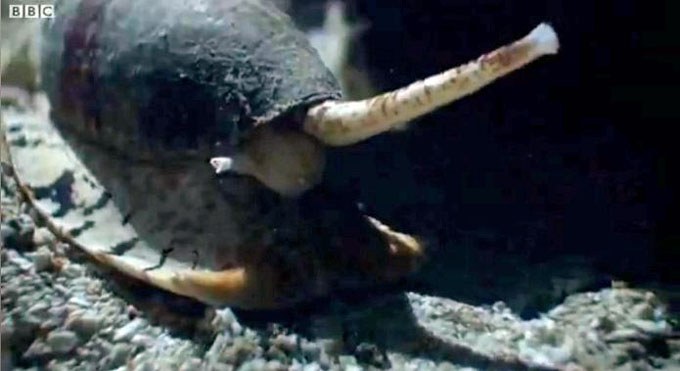
Watch as a venomous cone snail captures its prey [video]
The cone snail is classified in the Conus genus, which is very large (over 600 species) and comprises predatory snails from small to large. It’s tropical and every single one of them is venomous.