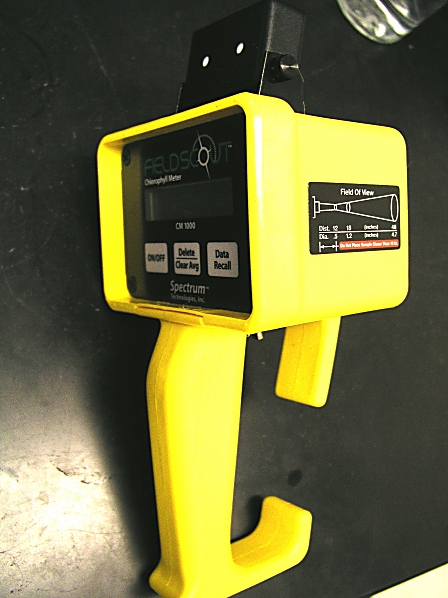
Imagine an instrument that has
the potential of instantly reporting your corals’ well-being
– specifically an estimate of zooxanthellae chlorophyll content.
One could think of it as a ‘coral bleaching early warning
device.’…


Imagine an instrument that has
the potential of instantly reporting your corals’ well-being
– specifically an estimate of zooxanthellae chlorophyll content.
One could think of it as a ‘coral bleaching early warning
device.’…

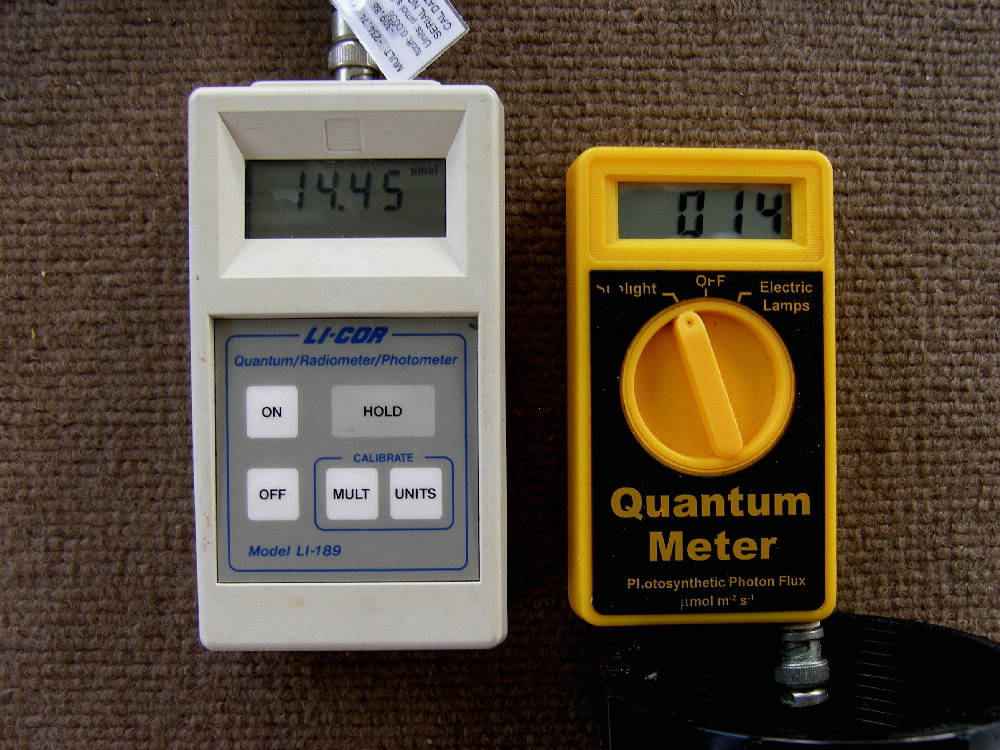 The author’s two PAR meters. On the left, a Li-Cor Model LI-189; on the right, an Apogee Instruments’ Model QMSW-SS (with optional BNC connector). Both show wear and tear from years of use, but have held up remarkably well.…
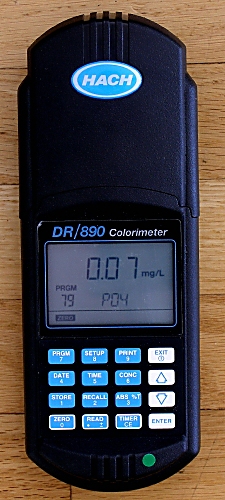

The Hach DR/890 Colorimeter, displaying
results of an ortho-phosphate test.
Many hobbyists rely on their
animals’ overall health as indicators of proper environmental
conditions. We certainly can’t argue of the successes achieved with
this method – the method is simple and inexpensive.…
In the mid-1980’s, when the reef hobby was in its infancy in North America, pioneer reefkeepers were literally bombarded with information. Trickle filters, surface overflows, high output lighting, calcium additions, etc.…
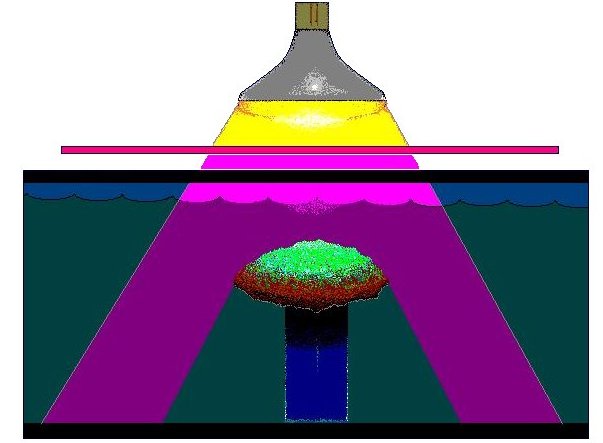
Where would the reef aquarium hobby be without debate? Everyone has an opinion, and I have certainly embraced certain theories. One such theory is that artificially-produced ultraviolet radiation (UVR) has potentially harmful effects on marine invertebrates.…
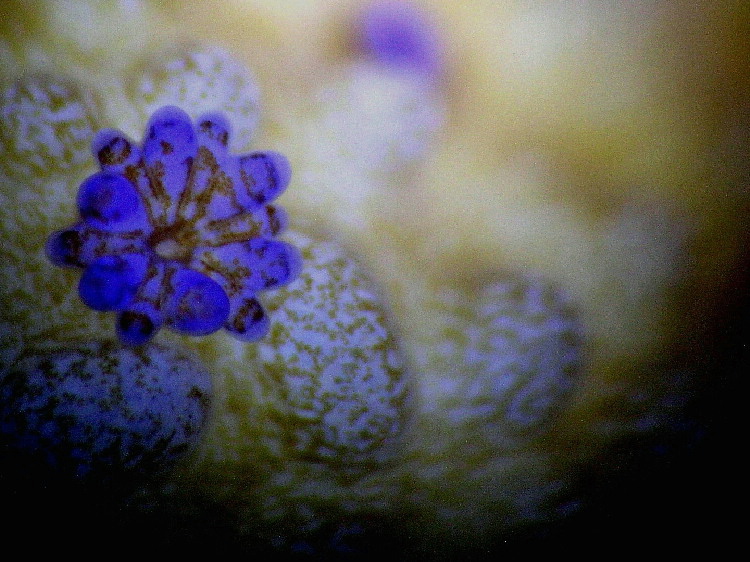
“Is it possible to have too much light over my reef aquarium?” is a simple – and legitimate – question. Opinions widely vary on just how much light is enough (or too much).…
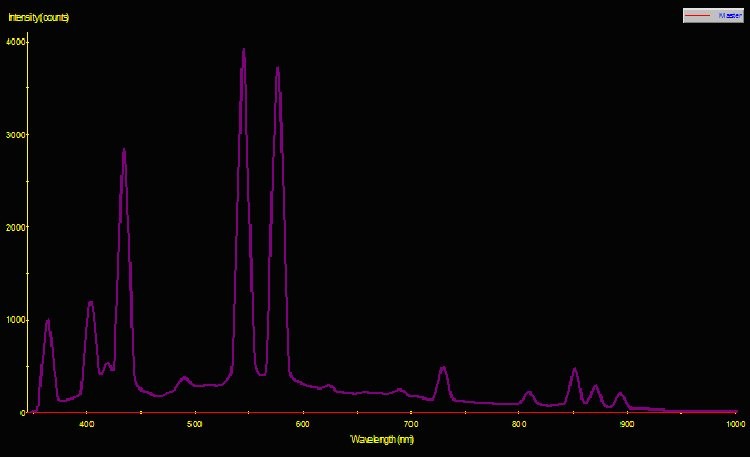
The aquarium containing marine invertebrates evolved as an extension of the ‘fish-only’ marine aquarium that has been popular since the 1960’s. Hence, many of the challenges (such as ammonia control, metal toxicity, etc.)…
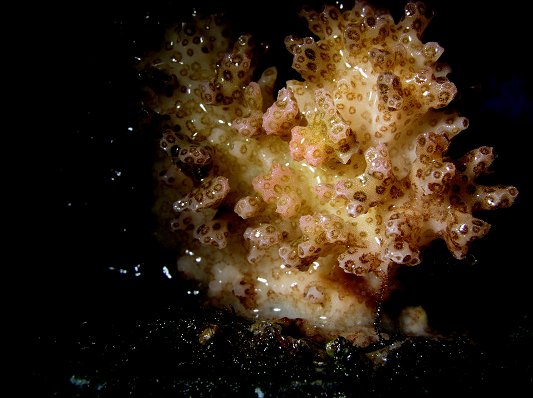
Lighting is an extremely important consideration for reef aquarium hobbyists, yet there are still many unanswered questions concerning artificial light sources and their effects on captive corals.…
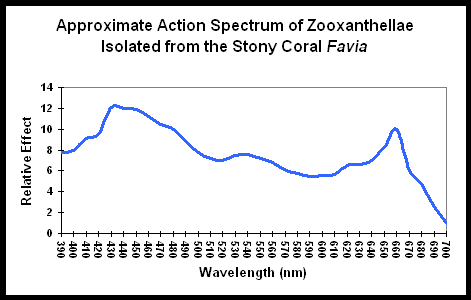
It seems that avid reef aquaria hobbyists are constantly in search of a better lighting system. Perhaps one is motivated by a desire for more rapid coral growth, or simply an aquarium that is more pleasing to the eye.…