
Joe Rowlett
  • Joe is classically trained in the zoological arts and sciences, with a particular focus on the esoterica of invertebrate taxonomy and evolution. He’s written for several aquarium publications and for many years lorded over the marinelife at Chicago’s venerable Old Town Aquarium. He currently studies prairie insect ecology at the Field Museum of Natural History and fish phylogenetics at the University of Chicago.

    View all posts

Recent Content

A Mysterious New Fairy Wrasse From Ogasawara

A Mysterious New Fairy Wrasse From Ogasawara

The Cirrhilabrus fairy wrasses represent one of the most diverse and beloved groups of reef-associated fish, popular with both aquarists and divers alike for their beautiful colors and spectacular mating displays. There are currently more than fifty species recognized...

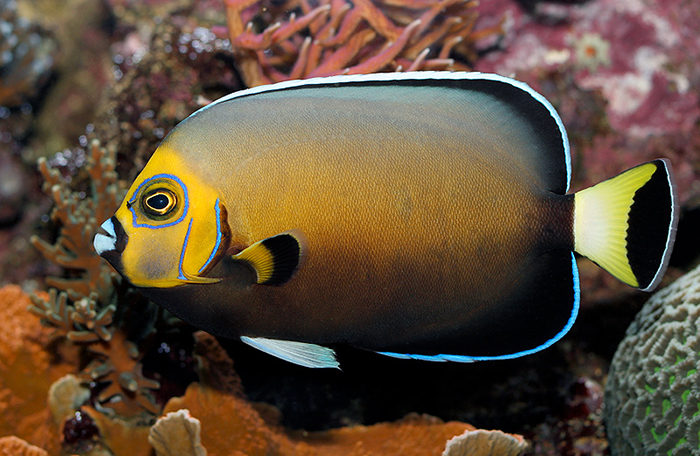
The Evolution and Biogeography of Chaetodontoplus

The Evolution and Biogeography of Chaetodontoplus

By Joe Rowlett 
The Angelfishes of the Pomacanthidae are undoubtedly some of the most universally popular species in the marine aquarium world. At the same time, their large size and showy patterns have made them some of the most well-documented and photographed of...

Red & Green Halichoeres Wrasses – A Photographic Guide

Red & Green Halichoeres Wrasses – A Photographic Guide

The many colorful wrasses of the genus Halichoeres represent some of the most popular fishes for the reef aquarium, including such familiar names as the Christmas Wrasse, Melanurus Wrasse, Canary Wrasse and rarer beauties like the Earmuff Wrasse. With roughly 80...

Briareum cylindrum, a new species of star polyp

Briareum cylindrum, a new species of star polyp

Green Star Polyps are about as common an aquarium coral as there is, but, if you stare at enough of them, you might notice something unexpected—there are quite a few different varieties of this coral available to aquarists. For instance, some specimens have long...

The Hypnotic Dance of Idiomysis

The Hypnotic Dance of Idiomysis

As aquarists, we tend to think of mysid shrimps as little more than food for our fishes, ignoring that these are some of the most diverse and ecologically important creatures in tropical marine ecosystems. Roughly 1,000 species are known, but within our fish tanks we...

A Guide to Aquarium Bandfishes (Cepola & Acanthocepola)

A Guide to Aquarium Bandfishes (Cepola & Acanthocepola)

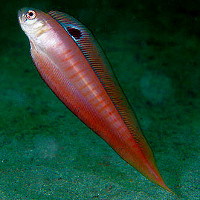
Bandfishes are a rarely seen offering in the aquarium trade, ideal for those desiring something a bit more unusual to add to their aquatic menagerie. They originate from silty habitats, where their eel-like bodies are used to create vertical burrows, which they hover...

A Most Illustrious Worm: Ikeda taenioides

A Most Illustrious Worm: Ikeda taenioides

I'd like to draw your attention today to a remarkable worm, Ikeda taenioides, whose immense size and bizarre morphology make it unlike anything you are likely to have seen before—a veritable living tape measure of a creature, stuck on its own lonely, idiosyncratic...

Evolution & Diversity of Mirolabrichthys Basslets: Part 5

Evolution & Diversity of Mirolabrichthys Basslets: Part 5

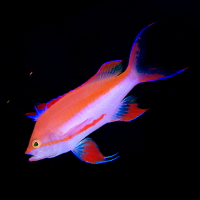
The Immaculate Clade: smithvanizi, parvirostris, unimarginatus, bimarginatus & cf bimarginatus “Africa” This clade can be recognized by the thick lavender margins of the caudal fin and the usual presence of a thin red stripe along the base of the dorsal fin. Four...

Evolution & Diversity of Mirolabrichthys Basslets: Part 5

Evolution & Diversity of Mirolabrichthys Basslets: Part 4

The Red-banded Clade: lori, flavoguttatus, privitera, aurulentus & cf aurulentus “Coral Sea” The last clades to discuss are best recognized by lacking the stripe running posteroventrally from the eye, a character otherwise seen in most (all?) other Pseudanthias....