
Joe Rowlett
  • Joe is classically trained in the zoological arts and sciences, with a particular focus on the esoterica of invertebrate taxonomy and evolution. He’s written for several aquarium publications and for many years lorded over the marinelife at Chicago’s venerable Old Town Aquarium. He currently studies prairie insect ecology at the Field Museum of Natural History and fish phylogenetics at the University of Chicago.

    View all posts

Recent Content

The Iramo: a highly dangerous aquarium coral

The Iramo: a highly dangerous aquarium coral

Given how many dangerous creatures are readily available in the aquarium industry, it’s easy to think that aquarists might have a tendency towards masochism. There are potentially lethal corals (Palythoa cf toxica)... there are potentially lethal urchins… there are...
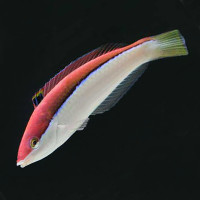
The Evolution and Biogeography of Pseudojuloides: Part 5

The Evolution and Biogeography of Pseudojuloides: Part 5

The cerasinus Group This group exemplifies the difficulties inherent to delimiting “species” of reef fishes. Currently, five are officially recognized, with several more distinctive populations in need of further study. There is very little overlap in their respective...

The Evolution and Biogeography of Pseudojuloides: Part 5

The Evolution and Biogeography of Pseudojuloides: Part 4

The mesostigma Group: Black-spot (mesostigma) & Lightning Pencil Wrasses (P. zeus)   Two poorly studied and seldom encountered species are known in this group, both of which make rare appearances in the aquarium trade. P. mesostigma is the more well known of...

The Evolution and Biogeography of Pseudojuloides: Part 5

The Evolution and Biogeography of Pseudojuloides: Part 3

The severnsi Group: Royal (severnsi), African (edwardi), & Mauritian (erythrops) Pencil Wrasses   The three described species in this group share a number of easily observable characters: 1) A black “hood” covering the anterodorsal portions of the body. 2) A...

The Evolution and Biogeography of Pseudojuloides: Part 5

The Evolution and Biogeography of Pseudojuloides: Part 2

The elongatus Group: African (argyreogaster), Japanese (cf elongatus), Western (cf elongatus) & Eastern Australian (elongatus) Seaweed Wrasses The four known variants in this group occupy widely separated parts of the globe and are unique amongst Pseudojuloides...

The Evolution and Biogeography of Pseudojuloides: Part 5

The Evolution and Biogeography of Pseudojuloides: Part 1

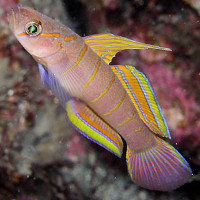
The slender and elegant Pseudojuloides wrasses represent some of the most colorful and sought after species in the reef aquarium hobby, but, despite their enduring popularity, the numerous described species and undescribed regional variants are poorly known fishes....

Rare and beautiful Pterogobius from Japan

Rare and beautiful Pterogobius from Japan

There’s something about the waters of the Pacific Northwest that seems to encourage the creation of unusually beautiful species. Centropyge interrupta… Cirrhilabrus lanceolatus… Tosanoides flavofasciatus… It’s as if the reefs of Japan are showing off to the rest of...

Ultra rare Nursalim Flasherwrasse filmed for the first time

Ultra rare Nursalim Flasherwrasse filmed for the first time

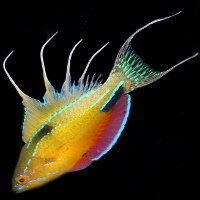
https://youtu.be/ejcn9eMscU4 We finally have video for one of the rarest wrasses of the Indo-Pacific, a species only discovered in the last decade and which has yet to be collected for the aquarium trade—the Nursalim Flasherwrasse (Parachelinus nursalim)....

Pygmy Jawfish filmed in the wild for the first time

Pygmy Jawfish filmed in the wild for the first time

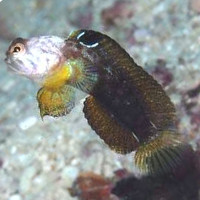
https://youtu.be/0pqyAjix_-g It was just last week that I shared the story of the Pygmy Jawfish, an undescribed species of dwarf Opistognathus with some truly spectacular mating colors. And, wouldn't you know it, right after I posted that I happened to stumbled upon a...