

When we talk about electrical safety in a reef aquarium, most aquarists immediately think about lighting systems, return pumps, wavemakers, heaters, controllers and automation. Far fewer think seriously about what happens when the power goes out. Yet this is one of the most critical scenarios for any aquarium, especially a mature reef tank with fish, corals, bacteria, circulation needs and a constant demand for oxygen exchange.
A blackout lasting more than a few minutes can turn a perfectly stable aquarium into a fragile system. This is where a compact power station such as the Bluetti Elite 30 V2 becomes interesting: not as a generic gadget, but as a potential emergency lifeline for an aquarium during a power outage.
In this review, we look at the Bluetti Elite 30 V2 from a very practical aquarium perspective. We are not simply presenting a portable 288 Wh power station. The real question is whether a device like this can become a useful backup solution for a reef aquarium, how it compares to a traditional UPS, which aquarium devices should be prioritized during an outage, and how realistic runtime can be estimated.
The article is based on real-world testing on an operating aquarium. We tested the unit first with the return pump only, and then with a more complete emergency setup including the return pump, a wavemaker and a skimmer.
📌 What you will find in this article
- Video review and real-world test
- What is the Bluetti Elite 30 V2?
- Why backup power matters in a reef aquarium
- Why the return pump is the first priority
- Power station vs traditional UPS
- The Bluetti app
- How we configured the Bluetti for aquarium backup use
- First test: return pump only
- Second test: return pump, wavemaker and skimmer
- Real power, apparent power and why readings may differ
- How to estimate backup runtime
- Bluetti discount code for reef aquarium backup
- Final thoughts
- FAQ
Video review and real-world test
In the video accompanying this article, we show the Bluetti Elite 30 V2 used as a backup system for an aquarium. We look at the unit, the app, the main settings, and the real runtime tests carried out on an active aquarium system.
This is an important subject because power outages are often ignored until they actually happen. At that point, the question is no longer how beautiful the aquarium looks, but how long the system can remain biologically stable without electricity. In many reef tanks, the answer is: not as long as we would like.
What is the Bluetti Elite 30 V2?
The Bluetti Elite 30 V2 is a compact portable power station with an integrated 288 Wh battery. It is designed to provide power during travel, outdoor use, emergencies or small-load backup situations. In the aquarium context, its most interesting use is as an emergency power source during a blackout.
Its compact format, simple operation and app-based monitoring make it particularly interesting for aquarists who want a practical backup solution without immediately moving toward larger, more expensive or more complex systems. Unlike many traditional consumer UPS units, a power station like this is designed to provide usable energy for a more meaningful period of time, not just to keep electronics alive for a few minutes.

The Bluetti Elite 30 V2 uses LiFePO4 battery chemistry, known for stability and long cycle life, together with an integrated BMS, or Battery Management System. The BMS monitors key parameters such as voltage, current, temperature and cell status, helping protect the unit from overcharging, excessive discharge, overcurrent, short circuit and overheating.
Pricing varies depending on region, retailer and promotions, but the unit sits in a relatively accessible segment compared with many high-quality backup solutions. What matters most for aquarium use, however, is not just the purchase price, but the balance between usable runtime, safety, monitoring, battery life and ease of deployment during an emergency.
Why backup power matters in a reef aquarium
A reef aquarium is a biological system that depends almost entirely on electricity. Water movement, gas exchange, filtration, skimming, heating, cooling and automation all depend on powered equipment. During a blackout, however, not all devices have the same priority.
The first goal during a power outage is not to keep the aquarium running exactly as usual. The priority is to preserve oxygen exchange, avoid stagnant water, keep the biological system alive and prevent the tank from reaching a critical respiratory condition before temperature or chemistry become the main issue.

In many mature and heavily stocked aquariums, the biggest risk during the first hours of a blackout is not the loss of light. It is the loss of circulation, surface agitation and oxygenation. If water stops moving between the display and the sump, or stops moving properly inside the aquarium, oxygen levels can drop rapidly and the whole system can become unstable.
In a densely stocked aquarium, even a relatively short outage can create serious problems. This is exactly why a reliable backup system should be considered part of the aquarium’s safety infrastructure rather than an optional accessory.
Why the return pump is the first priority
In a typical reef aquarium with a sump, the most logical device to keep running during an emergency is often the return pump. By powering the return pump, water continues to circulate between the display tank and the sump, overflow and surface exchange remain active, and a large part of the system’s biological stability is preserved with a relatively low energy demand.

This is one of the key points of the entire test. During an emergency, the goal is not necessarily to power everything. The goal is to power the equipment that gives the aquarium the best chance of survival. In a sump-based reef system, the return pump is usually the first device to consider.
This does not mean that wavemakers and skimmers are irrelevant. They can certainly be useful. But in terms of energy consumption versus biological benefit, the return pump often offers the best compromise. It keeps the system connected, maintains water exchange and allows the battery to last significantly longer.


In a freshwater aquarium, or in a marine aquarium without a sump, the priorities change. In those systems, surface agitation, circulation or the biological filter may become the most important loads to keep alive.
Power station vs traditional UPS
A fair question is whether it makes more sense to use a traditional UPS instead of a portable power station. The answer depends on what the aquarist expects from the backup system.

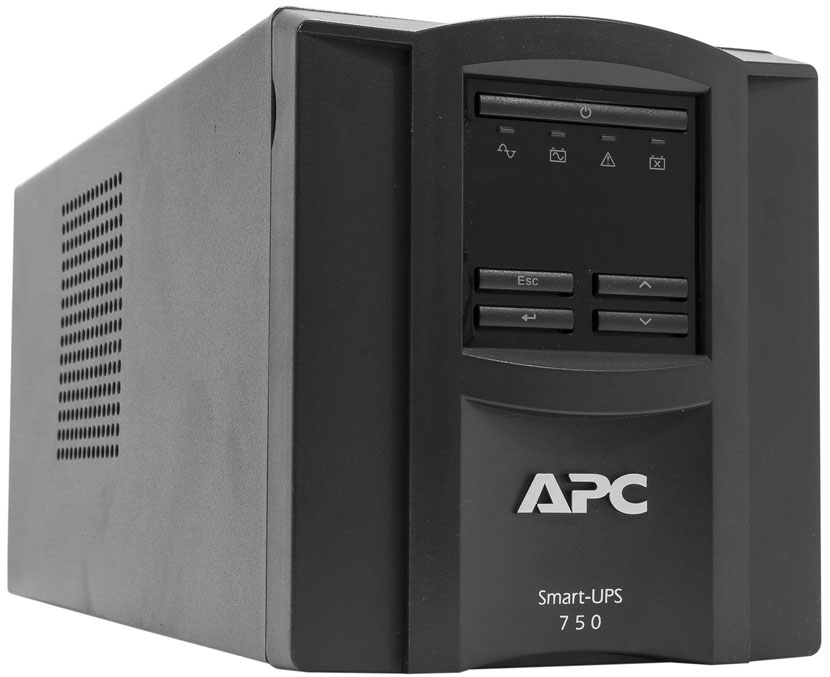
A traditional UPS is generally designed for computers, routers, NAS units and small electronics. Its main purpose is to provide instant continuity and enough time to shut down equipment safely. Runtime is often short, especially with consumer models and meaningful loads.
A power station such as the Bluetti Elite 30 V2 follows a different logic. It is not only about switching instantly to battery power, but also about having a more substantial amount of stored energy available for practical emergency use.
📌 Traditional UPS vs Bluetti: real differences in aquarium use
| Aspect | Traditional UPS | Bluetti / power station |
|---|---|---|
| Design purpose | Short-term continuity for electronics | Stored energy for longer emergency use |
| Typical battery type | Often lead-acid in consumer units | LiFePO4 battery chemistry |
| Runtime | Usually limited with real aquarium loads | More suitable for several hours of selected aquarium backup |
| Monitoring | Often limited | Display and app monitoring |
| Best aquarium use | Short outages or very small loads | Selected essential loads during real emergencies |
This does not mean that a traditional UPS has no place in aquarium keeping. It means that a power station can be more flexible and more useful when the goal is to maximize the survival time of the aquarium by powering only the most important devices.
The Bluetti app
One of the most useful aspects of the Bluetti Elite 30 V2 is the dedicated app. For aquarium use, this is more than a convenience. Being able to check remaining battery level, active outputs, load and estimated runtime can make a real difference during a blackout.


The app makes it easier to understand whether the unit is behaving as expected. In an emergency, clear data is important. It also allows the aquarist to monitor the unit without relying only on the front display.
How we configured the Bluetti for aquarium backup use
To use the Bluetti Elite 30 V2 as an aquarium backup, it is important to configure it properly. The goal is to keep the unit ready to supply power during an outage while feeding only the essential loads.
For our test, we used the following approach:
- Operating mode: Standard UPS;
- AC-ECO: Disabled, to prevent shutdown with very low loads;
- Auto sleep: Never;
- Main switch status: Set to remain on.
The most important setting for very low aquarium loads is disabling ECO behavior. Some aquarium devices, especially efficient DC pumps, may draw so little power that the power station could interpret them as insignificant loads if ECO behavior remains active.


With the right configuration, the Bluetti is no longer just a portable battery. It becomes a practical aquarium backup device, ready to keep the most important equipment alive when the grid fails.
First test: return pump only
The first test was deliberately the most conservative and, from a reef-keeping perspective, probably the most important: powering only the return pump.
The return pump used in the test was an Octo VarioS 2, set to consume only 13 watts, with a flow of approximately 650 l/h. This was enough to keep the system circulating through the sump and maintain basic water exchange.

The result was excellent. With only the 13-watt return pump connected, the Bluetti Elite 30 V2 ran for 11 hours and 23 minutes. This is a very meaningful result for aquarium use, because it shows that even a compact 288 Wh power station can provide a practical emergency window if the load is selected intelligently.
One detail is worth noting. During this test, the Bluetti display and app showed a load of zero watts, while still displaying an estimated backup time. This happens because the unit does not reliably detect very low instantaneous loads, roughly below 15 watts. However, with ECO disabled and the correct settings applied, the unit continued powering the pump until the end of the test.
Second test: return pump, wavemaker and skimmer
For the second test, we increased the load and connected a more complete emergency configuration: return pump, wavemaker and skimmer. This is no longer the minimum survival setup, but a more advanced emergency configuration that keeps more of the aquarium operating.
In this setup, the Bluetti Elite 30 V2 achieved a runtime of 6 hours and 39 minutes. As expected, increasing the load reduced the runtime, but the result remained useful and realistic for shorter outages.

In this test, the actual measured load was around 32 watts, while the Bluetti display and app showed approximately 55 watts. This apparent discrepancy is related to the difference between real power and apparent power, especially when dealing with pumps, motors and electronic power supplies.
For long outages, the return-pump-only setup remains the more rational choice because it maximizes survival time. The more complete setup is useful for shorter outages, but it consumes the battery faster.
Real power, apparent power and why readings may differ
When powering aquarium pumps and similar equipment, the numbers shown by displays, apps or external meters may not always match perfectly. The reason is that there is a difference between real power and apparent power.
Real power, expressed in watts, is the power actually converted into useful work, heat or movement. Apparent power, expressed in volt-amperes, is the product of voltage and current without accounting for the phase relationship between them. With purely resistive loads, such as heaters, watts and volt-amperes are usually very close. With pumps, motors and electronic power supplies, the difference can be more noticeable.

This is where the power factor becomes important. If the power factor is below 1, apparent power can be significantly higher than real power. In practical terms, the system may see more current flowing than the amount of useful power being converted by the load.
For aquarium backup planning, what matters most is not the instantaneous number shown on the display, but the actual runtime achieved with the real aquarium load. This is why real-world tests are so valuable.
How to estimate backup runtime
The Bluetti Elite 30 V2 has a nominal capacity of 288 Wh. In ideal terms, this means it could provide 288 watts for one hour, 144 watts for two hours, or 28.8 watts for ten hours. In real use, however, runtime is affected by inverter efficiency, the internal consumption of the power station and the behavior of the connected load.
In the return-pump-only test, the battery lasted 11 hours and 23 minutes, or 683 minutes. Dividing 288 Wh by 683 minutes and multiplying by 60 gives an overall average system draw of approximately 25.3 watts. Since the pump itself consumed about 13 watts, the difference includes conversion losses and the internal consumption of the power station.

In the second test, with a runtime of 6 hours and 39 minutes, or 399 minutes, the same calculation gives an average system draw of about 43.3 watts. With an estimated aquarium load of around 32 watts, the remaining difference again reflects conversion losses and the internal consumption of the unit.
This empirical approach is useful because it reflects real aquarium use. For planning purposes, it is always better to be conservative and test the actual setup rather than relying only on theoretical battery capacity.
A simple practical method is to identify the essential loads, measure their real consumption, and then run a controlled test before an emergency occurs. The result will be far more useful than any theoretical estimate.
Bluetti discount code for reef aquarium backup
For readers interested in using a Bluetti power station as a backup solution for their reef aquarium, we also have a dedicated link and discount code.
🔋 Bluetti discount code for DaniReef / Reefs.com readers
By opening the product through our dedicated Bluetti link and entering the code DaniReef at checkout, you can get a 5% discount.
This can be useful if you are considering adding a serious backup system to your aquarium, whether for a small reef tank, a larger system, or even just to keep essential circulation running during a blackout.
Important: to apply the discount, open the Bluetti product through the link below and then enter the code DaniReef during checkout.
Disclosure: this is an affiliate link. Using it may support our work at no additional cost to you.
Final thoughts
The Bluetti Elite 30 V2 proved to be a very interesting solution for aquarium backup use. It does not replace a full home backup system, and it does not remove the need to think carefully about which devices should be powered during an outage. But it does offer a serious, compact and practical way to keep essential aquarium equipment running when the grid fails.
The most important result was the return-pump-only test: more than 11 hours of runtime with a carefully selected 13-watt load. For many reef aquariums, this can be the difference between a stressful but manageable blackout and a serious biological emergency.

The second test, with return pump, wavemaker and skimmer, showed that the unit can also support a more complete emergency configuration for almost seven hours. That is useful, but for longer outages the best strategy is usually to reduce the load and prioritize the equipment that provides the greatest biological benefit.
Larger power stations would naturally open even more possibilities, especially for larger aquariums or for aquarists who want to keep more equipment running. But even in this compact format, the Bluetti Elite 30 V2 shows that a modern power station can be a credible and practical backup option for reef aquariums.
📡 Practical tip: consider powering your router too
If the power station has enough capacity for your setup, keeping the home router powered during an outage can be useful.
This allows the Bluetti app and other connected aquarium monitoring systems to remain reachable remotely, as long as the internet connection itself is still available.
It adds some consumption, but in many real-world situations the ability to monitor the system remotely can be extremely valuable.
The key lesson is simple: do not wait for the blackout to happen. Choose the essential loads, test the actual runtime, disable settings that may interfere with low-power devices, and build a backup strategy before the emergency arrives.
FAQ
Yes, a Bluetti power station can be used as an aquarium backup system, especially when the goal is to power selected essential loads for several hours during a blackout.
In a sump-based reef aquarium, the return pump is usually the first priority because it keeps water circulating between the display tank and the sump and helps maintain oxygen exchange.
With only a 13-watt return pump connected, the Bluetti Elite 30 V2 ran for 11 hours and 23 minutes. With return pump, wavemaker and skimmer, it ran for 6 hours and 39 minutes.
It depends on the goal. A traditional UPS is useful for short interruptions, while a power station can be more suitable when several hours of runtime are needed with carefully selected aquarium loads.
Aquarium pumps and electronic loads can show differences between real power and apparent power. Very low loads may also be difficult for the unit to detect accurately on the display.
In many cases, yes. Efficient aquarium pumps may draw very little power, and ECO behavior can sometimes shut down low-load devices. For backup use, the unit should be tested with the actual aquarium equipment.












0 Comments