
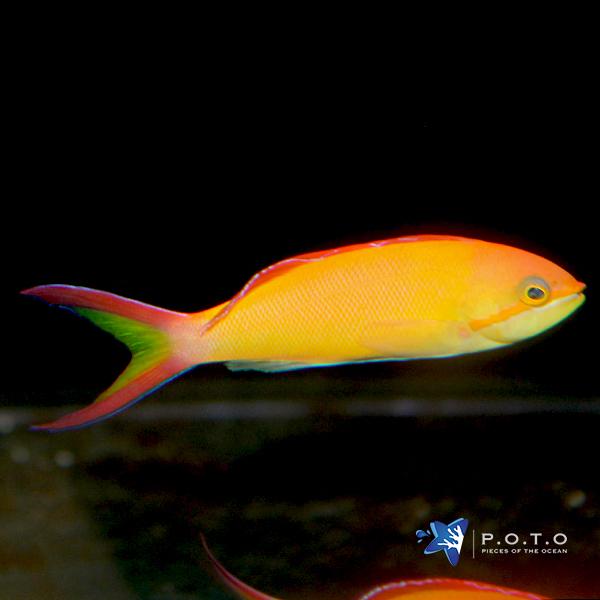
Found at the upper-edge of steep outer reef slopes, with moderate currents. Occurs in large aggregations, of mixed sexes when feeding in currents sweeping the reef.
Generally males are more colorful and typically outnumbered by females. Each male dominates a group of females and enforces a pecking-order hierarchy. In the event the male is gone, the most dominant female will turn male and assumes the dominant male’s role in the harem. This is very interesting to observer in captivity if the aquarium is large enough. However if confined to a small space the weaker individuals can get harassed into hiding, refusing to eat and wasting away.
The Dispar Anthias is commonly known as the Madder Seaperch. Males have a bright red dorsal fin and lack any red stripes on their tail. The female may display a yellowish-orange on the top and pale lavender to white on the underside. The Dispar Anthias is a reef inhabitant in the wild. It is a shallow water species that thrives best in a 125 gallon aquarium with one male and up to ten females. When housed singly, 70 gallon tank is sufficient. Anthias species all share the trait of being hermaphroditic. If a dominant male perishes, the largest female of the group will often morph to take its place. Once acclimated to a new aquarium, anthias do best when fed a varied diet of frozen mysis shrimp , enriched frozen brine shrimp , and over time may eat high-quality flake foods offered in small quantities throughout the day. An attached refugium cultivating copepods and amphipods provides a steady supply of nutritious live food sure to keep this active planktivore content.