
As reefers, most of us are in an odd gray area between maximalism and minimalism. Our favorite gaudy corals and flashy fish certainly don’t scream “less is more”. When it comes to equipment, despite our best attempts, the home reef is littered with wave makers, tubing, visible overflows, and the occasional HOB filter in cases where the tank’s owner has so far been too lazy to install a sump (I might be talking about myself).
In freshwater fishkeeping, with its more limited color palette, aquascapers have long elevated minimalism to a science—and I think we can learn a thing or two from them. Lily pipes are the perfect example: out with the PVC tubing, in with the glass. But is this feasible in saltwater?
Do lily pipes work in a reef?
They can! Reefers don’t tend to use lily pipes for filtration inflow purposes, as that’s usually taken care of by an overflow leading to a sump rather than an intake leading to a canister filter. But you can use a lily pipe for the outflow, and you could even consider replacing your regular ol’ overflow with a glass one for good measure—they’re on the expensive side, but man do they look good. If you do happen to be one of the rare reefers who uses a canister filter, lily pipes work well for both in- and outflow.
Now, before you go for it, do remember that not all reefs are ideal for the dainty lily pipe outflow look. This concept definitely works best in smaller set-ups. In larger aquariums, the flow demand will usually just be too high, particularly if you grow flow-loving SPS corals. Keep in mind that lily pipes produce smooth, laminar water movement rather than the chaotic, random patterns that some reef inhabitants demand. The ideal contender would be something like my own 8-gallon lazy reef cube: small, mostly filled with softies, and not in need of crazy flow levels.

If you do want to use a lily pipe outflow but are worried about flow levels, there are designs that feature a sort of jet nozzle rather than the regular cup: Amazon product: b01k4j94lc
Saltwater maintenance for lily pipes
Maintenance is always a struggle when one chooses to use lily pipes, even in freshwater: their transparency means every tiny speck of algae will show. In saltwater tanks there’s the salt creep and coralline algae to contend with, but if you don’t mind regularly cleaning the pipes, they can look great even without hours of scrubbing.
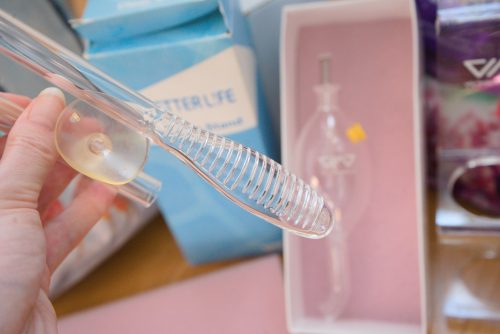

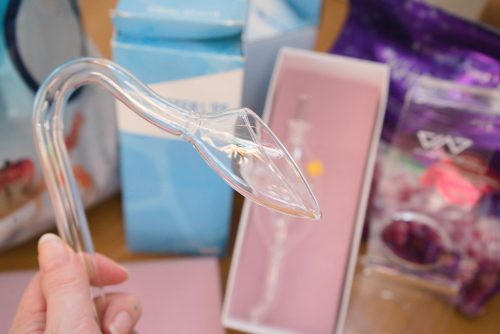
Your best bet for reducing lily pipe maintenance is by keeping up with it. Give the glass a wipe with RO/DI water at least once a week or so in order to prevent salt from building up. Whenever you take a moment for regular tank maintenance, you can remove the pipes and soak them in a 1:1 water and acid (white vinegar or citric acid) mixture to finish off any salt that did take hold. Any developing coralline algae will also be loosened this way, making it much easier to remove using a flexible pipe brush—you can do the outside with an old credit card or similar soft scraper (no metal please!).
Tip: Many of the more serious freshwater aquascapers simply buy two sets of lily pipes. That way they don’t have to rush to clean the pipes while the filter is turned off; the new, clean ones can be swapped in while the old ones enjoy a good cleansing soak.
What brand should you choose?
 The holy grail in terms of glassware for aquariums is undoubtedly ADA, the Japanese brand named after legendary freshwater aquascaper Takashi Amano. There’s also Mame, another Japanese firm highly appreciated for its lovely glass overflow system in particular (our colleagues at Reef Builders called it “the most luscious piece of hardware ever built or conceived for the marine aquarium”, and they’ve got a point). Both ADA and Mame are obviously fantastic, but also very much on the pricey side.
Given that I’m on a writer’s budget (cue tiny violin), most of my personal experience with lily pipes and other glassware for aquariums has been with VIV, a company based in Hong Kong. I’ve always been pleased with the accessories, of which I have quite a few. Aside from the design not being quite as polished as the more expensive options, I haven’t run into issues; VIV even produces an overflow system similar in looks to the one by Mame at a fraction of the price. These Asian choices may sound somewhat obscure, but there aren’t actually that many companies that produce a range of glassware for fish tanks, especially the overflows.
By the way: you can find lots of cheap lily pipes on marketplaces like Amazon and AliExpress, but some of these pieces come with a catch: they’re made of regular soda-lime glass, which isn’t quite as durable as the borosilicate glass used for mid- to high-range glassware. You may get away with soda-lime for glassware that sits underwater, like feeding dishes, but lily pipes and overflows take a beating because they’re only partially submerged. Borosilicate responds better to regular scrubbing, acid soaking, and even thermal shock (like when you dunk it in hot water to soak). It’s less prone to scratching, hazing, or cracking.
I’ve also seen stainless steel lily pipe sets for saltwater aquariums, but using something that isn’t transparent seems a little beside the point if you’re going to use this type of outflow. Shiny metal doesn’t really scream “minimal” to me.
To wrap up, here’s a borosilicate glass outflow option that won’t break the bank. Enjoy the glassware look!

Amamzon product # B01MPX9INX















0 Comments