
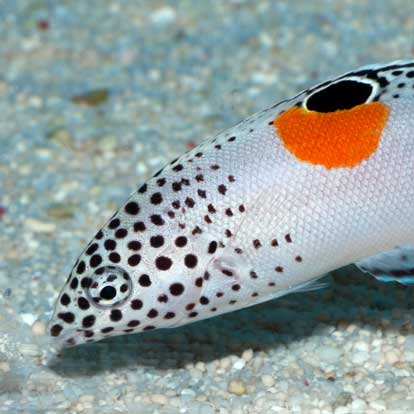
The small, attractive juvenile form of the Twinspot Wrasse is most often seen in the aquarium trade, but don’t be fooled – this fish will turn from white with orange eyespots and black dots to a dark green monster when it matures. They typically reach about two feet long in captivity, but fishbase reports the largest specimens measured to be nearly four feet in length. Newly acquired juveniles are timid and shy, requiring a deep sand bed for burrowing. They tend to be fragile when very small. Use caution when introducing new fish to an older twinspot wrasse. They will consume most invertebrates like crabs, shrimp, and marine worms. Adult twin spot wrasse are not recommended for reef aquariums because their foraging activities can harm corals.
The Twin Spot Wrasse is also referred to as the Clown Coris, or Twinspot Coris. The juvenile is silver with dark spots on the face. The dorsal fin has a pair of dark spots with yellow highlights on the body. The adult becomes blue-green with a white or light green band around the midsection. When courting, the male will display an increased color intensity. It requires a 300 gallon or larger aquarium with a 4-6 inch layer of sand in which to bury itself. A single male can be kept with a group of females that is introduced prior to or at the same time as the male. The Twin Spot Wrasse will eat urchins, crabs, shrimp, and small invertebrates. It is an excellent hunter and will leave no rock unturned (literally), in search of food. The Twin Spot Wrasse diet should include vitamin enriched frozen mysis shrimp, vitamin enriched frozen brine shrimp, and other meaty foods along with a high quality marine flake and marine pellet food.